
Reveal How to END Your Low Back Pain While Standing Struggle!

Did you know millions of people worldwide suffer from lower back pain when standing for long? This pain can make simple tasks hard.
Maybe you're one of them, wondering why you hurt and how to stop it. The good news is, knowing the causes and using the right strategies can help a lot.
This article will show you why you might be in pain and give you tips to manage it. You might even find a way to end your struggle with lower back pain.

The Hidden Toll of Standing-Related Back Pain
If you feel pain in your lower back when standing, you're not alone. Many people face this issue. It can affect your health and how well you work.
How Standing Affects Your Spine and Muscles
Standing for a long time puts stress on your spine and muscles. This stress can cause pain in your lower back. It can also harm your spine over time if not treated.
The Physical and Mental Impact of Chronic Pain
Chronic pain from standing can hurt your body and mind. It can make moving harder and make daily tasks tough. It can also make you feel stressed, anxious, and sad.
Productivity Losses and Quality of Life
Chronic pain affects more than just your body and mind. It can also hurt your work and life quality. Here are some ways:
It makes work harder because of pain and discomfort.
It makes you tired, which lowers your work output.
It limits what you can do every day and who you can see.
It could lead to long-term disability if not treated.
It's important to understand the impact of standing-related back pain. By knowing the signs and acting early, you can reduce risks. This can improve your life quality.
Understanding Low Back Pain While Standing
It's important to know why low back pain happens when you stand. Standing changes how your body works, which can cause pain.
The Biomechanics of Standing Posture
Your posture when standing affects your spine and muscles. Standing right helps spread your weight evenly. This reduces strain on your lower back.
Weight Distribution and Pressure Points
Your weight goes through your spine to your legs when you stand. If your weight isn't evenly spread, it can cause pain.
Posture Type | Weight Distribution | Effect on Lower Back |
Proper Posture | Evenly distributed | Minimal strain |
Poor Posture | Unevenly distributed | Increased strain |
Why Pain Increases the Longer You Stand
Standing for a long time can make low back pain worse. Muscle fatigue and tension patterns play a big role. As you stand longer, your muscles get tired. This makes your lower back tense up more.
Muscle Fatigue and Tension Patterns
Muscle fatigue is a big reason for low back pain when standing. When your muscles get tired, they can't support your spine as well. This leads to more strain.
Common Causes Behind Your Standing Pain
Low back pain while standing often comes from muscle weaknesses and bad posture. Knowing these causes helps you find ways to feel better.
Muscular Weaknesses and Imbalances
Weak muscles in your core and glutes can cause back pain. These muscles help support your spine. Without them, your back can strain and hurt.
Core Stability Issues
Having a strong core is key to good posture and avoiding back pain. Weak core muscles make your back work too hard, leading to pain.
Postural Dysfunctions
Poor posture also leads to back pain when standing. Bad posture puts uneven stress on your spine.
Anterior Pelvic Tilt and Swayback
Issues like anterior pelvic tilt and swayback posture can make back pain worse. These problems change how your spine aligns, putting more stress on your lower back.
Postural Issue | Description | Impact on Lower Back |
Anterior Pelvic Tilt | The pelvis tilts forward, altering spinal alignment. | Increases stress on the lower back, leading to pain. |
Swayback Posture | Excessive inward curve of the lower back. | Can cause strain and discomfort due to uneven weight distribution. |
Medical Conditions That Contribute
Some medical conditions also cause back pain when standing. Knowing about these can help you tackle the root of your pain.
Degenerative Disc Disease and Arthritis
Diseases like degenerative disc disease and arthritis can cause chronic pain. They affect your spine and joints, making standing painful.

Understanding what causes your lower back pain when standing is the first step to relief. Whether it's strengthening muscles, fixing posture, or managing health issues, a full plan can help ease your pain.
Immediate Relief Tactics When Pain Strikes
If you're feeling lower back pain when standing, there are ways to make it better. It's important to know how to handle it to avoid making it worse.
The 90-Second Relief Protocol
The 90-Second Relief Protocol is a fast way to ease lower back tension. It includes specific stretches and positions that can be done in just 90 seconds.
Emergency Stretches and Positions
Some effective emergency stretches include:
Pelvic tilts to loosen tight muscles
Knee lifts to stretch the lower back
Arm circles to reduce overall tension
Standing with your hands on a countertop or sitting with your legs straight out can also help.
Proper Weight Shifting Techniques
Proper weight shifting can greatly reduce lower back strain. The 20/8/2 Standing Method is a good technique.
The 20/8/2 Standing Method
This method involves standing with your feet shoulder-width apart. Then, shift your weight every 20 minutes for 8 seconds, taking 2 steps to the side. This helps spread out the weight and prevent fatigue.
Supportive Gear That Actually Works
Using the right supportive gear can make a big difference. This includes the right shoes, insoles, and support belts to help with lower back pain.
Footwear, Insoles, and Support Belts
Supportive Gear | Benefits |
Ergonomic Footwear | Reduces strain on the lower back by promoting proper foot alignment |
Orthotic Insoles | Provides additional arch support and cushioning |
Lower Back Support Belts | Stabilizes the lower back and reduces strain during long periods of standing |
By using these immediate relief tactics every day, you can better manage low back pain while standing. This will improve your overall comfort.
Targeted Exercises to End Low Back Pain While Standing
If you're dealing with low back pain while standing, a good exercise plan can help. It can strengthen your core, improve your posture, and ease discomfort.
Core Stabilization Routine
A strong core is key for good posture and less back pain. Your core muscles, like the transverse abdominis and multifidus, help keep your spine stable.
Transverse Abdominis Activation
The transverse abdominis muscle is deep and wraps around your spine and pelvis. Here's how to engage it:
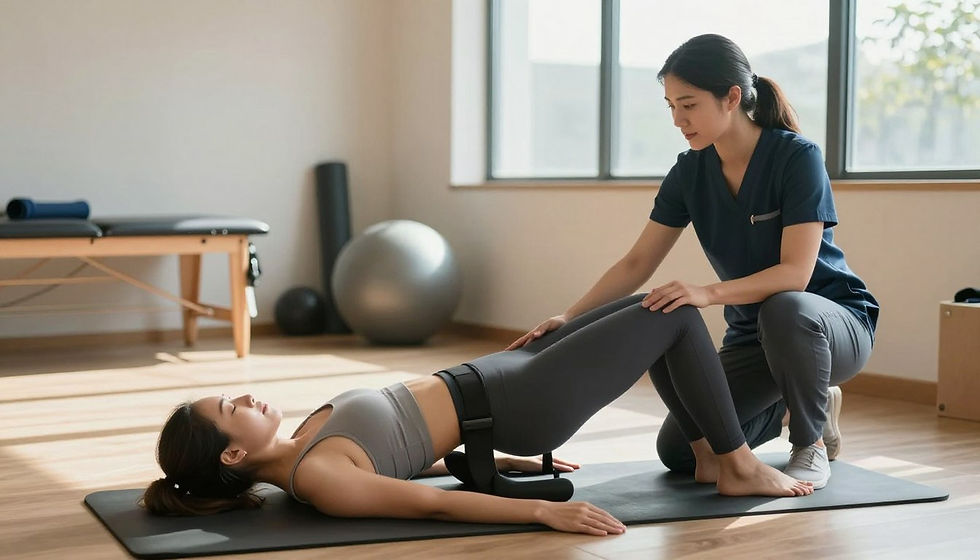
Lie on your back with your knees bent and feet flat on the floor.
Place your hands on your lower abdomen.
Draw your belly button towards your spine, engaging your transverse abdominis muscle.
Hold for 5-10 seconds and release.
Multifidus Strengthening
The multifidus muscle runs along your spine and helps with rotation and stability. To strengthen it:
Lie on your stomach with your arms extended above your head.
Slowly lift your arms, shoulders, and upper back off the ground, keeping your hips and legs relaxed.
Hold for a few seconds before lowering back down.
Hip and Glute Strengthening Program
Strong hips and glutes help keep your back aligned and reduce strain. Weakness here can lead to back pain when standing.
Progressive Loading Techniques
Progressive loading means increasing the intensity of your exercises. For hip and glute strengthening:
Start with bodyweight exercises like squats and lunges.
Progress to resistance band exercises or weighted squats and lunges.
Continue to increase the weight or resistance as your muscles become stronger.
Mobility Exercises for Spinal Health
Keeping your spine mobile is key to avoiding stiffness and pain. Regular mobility exercises keep your spine flexible and healthy.
Dynamic vs. Static Stretching Approaches
Dynamic and static stretching both have their uses. Dynamic stretching moves your joints, while static stretching holds a stretch for a while.
Stretching Type | Description | Benefits |
Dynamic Stretching | Involves movement through a range of motion | Prepares muscles for exercise, improves flexibility |
Static Stretching | Involves holding a stretch for a period | Improves flexibility, reduces muscle tension |
By adding these exercises to your daily routine, you can strengthen your core, improve your posture, and reduce back pain. Start slowly and progress gradually to avoid injury.
Correcting Your Posture When Standing Up Straight
Improving your standing posture can help avoid lower back pain. Standing correctly reduces stress on your back, which can stop pain. This guide will help you find your postural type, learn the 5-point alignment method, and increase your posture endurance.
Identifying Your Postural Type
Knowing your postural type is the first step to fixing it. Each type needs a different approach to correction.
Self-Assessment Techniques
To find your postural type, do a simple self-check. Stand in front of a mirror and look at your alignment from different angles. Look for any unevenness or deviations from straight.
Check if your ears are in line with your shoulders.
Observe if your shoulders are at the same height.
Note the curvature of your lower back.
The 5-Point Alignment Method
The 5-point alignment method helps you stand correctly. It focuses on aligning five key body parts.
Head, Shoulders, Spine, Hips, Feet
To use the 5-point method, focus on these points:
Alignment Point | Correct Positioning |
Head | Ears in line with shoulders |
Shoulders | Relaxed and at the same height |
Spine | Maintaining its natural curves |
Hips | Level and facing forward |
Feet | Shoulder-width apart and facing forward |

Building Postural Endurance
It's important to build endurance for good posture. This means strengthening your spine muscles and improving your posture.
Incremental Training Approaches
To build endurance, start with short periods of correct standing. Then, slowly increase the time. Do exercises that strengthen your core and improve flexibility.
By following these steps and practicing often, you can improve your standing posture. This can help reduce the risk of low back pain.
Workplace and Lifestyle Modifications
Making simple changes to your daily routine and workspace can help eliminate lower back pain when standing. By incorporating ergonomic practices, anti-fatigue solutions, and healthy daily habits, you can significantly reduce the strain on your lower back.
Ergonomic Standing Workstation Setup
An ergonomic workstation is crucial for minimizing lower back pain while standing. Adjusting your workspace to fit your body can make a significant difference.
Optimal Heights and Angles
Ensure your monitor is at eye level, and your keyboard and mouse are within easy reach to avoid leaning forward or stretching.
Workstation Component | Optimal Adjustment |
Monitor Height | At eye level or slightly below |
Keyboard Position | Directly in front of your body, elbows at 90 degrees |
Mouse Placement | Close to your body, at the same height as your keyboard |
Anti-Fatigue Solutions
Standing for long periods can be tiring and painful. Implementing anti-fatigue solutions can help alleviate this.
Mats, Footrests, and Movement Breaks
Using anti-fatigue mats, footrests, and taking regular movement breaks can reduce the strain on your lower back.
Anti-fatigue mats provide cushioning and encourage subtle movements.
Footrests help shift your weight and reduce pressure on your feet and back.
Regular movement breaks allow you to stretch and rest.
Daily Habits That Protect Your Back
Beyond your workstation, daily habits play a significant role in managing lower back pain.
Sleep Positions and Hydration Importance
Maintaining a healthy sleep position and staying hydrated are crucial for spinal health.
Sleep on a supportive mattress and consider a pillow between your knees.
Stay hydrated to maintain the elasticity of your spinal discs.
By implementing these workplace and lifestyle modifications, you can significantly reduce lower back pain when standing. It's about creating a healthier work environment and adopting habits that support your spinal health.
When to Consult a Healthcare Professional
Chronic lower back pain when standing too long can be really tough. It's important to know when to see a doctor. Some back pain can be handled on your own, but other times, you really need a doctor's help.
Red Flags That Shouldn't Be Ignored
Some symptoms mean you need to see a doctor right away. Knowing these signs can help you get help fast.
Pain Patterns That Indicate Serious Issues
Pain that goes down your legs, numbness, tingling, or weakness in your legs are big warning signs. Also, pain with fever, chills, or unexpected weight loss is a must-see doctor situation.
Specialist Options and Their Approaches
Many healthcare experts can help with back pain while standing. Each one has their own way of helping.
Physical Therapy vs. Chiropractic vs. Orthopedic Care
Physical therapists teach exercises and stretches to boost strength and mobility. Chiropractors adjust the spine to improve alignment. Orthopedic doctors might suggest surgery if needed.
Specialist | Approach | Benefits |
Physical Therapist | Exercise and Stretching | Improved mobility and strength |
Chiropractor | Spinal Manipulation | Spinal realignment |
Orthopedic Specialist | Surgical Options | Corrective surgery for underlying issues |
Treatment Expectations and Recovery Timelines
Knowing what treatment will be like can help you plan your recovery.
Conservative vs. Interventional Approaches
Conservative treatments include physical therapy, medicine, and lifestyle changes. More serious treatments might include injections or surgery. How long it takes to get better depends on the treatment and your situation.
The goal of treatment is to alleviate pain, improve function, and prevent future episodes. A healthcare professional can help you develop a personalized treatment plan.
Knowing when to see a doctor is a big step towards managing back pain. It can greatly improve your life.
FAQ's About Reveal How to END Your Low Back Pain While Standing Struggle!
What causes low back pain while standing?
Low back pain while standing can come from many sources. This includes weak muscles, bad posture, and health issues. Standing for a long time can make your lower back muscles tired. This can make existing problems worse.
How can I relieve low back pain when standing for long periods?
To ease low back pain, try changing your weight and taking breaks to sit or stretch. Use supportive gear like insoles or a back belt. Doing exercises that strengthen your core and improve your posture can also help.
Why does my lower back pain increase when I stand up straight?
Standing straight can sometimes make lower back pain worse if your posture is off. This puts extra strain on your muscles and spine. Making sure your posture is right, strengthening your core, and improving your posture can help.
What are some effective exercises to end low back pain while standing?
Exercises that work the core, hips, and glutes are great for reducing low back pain. This includes routines that stabilize your core, strengthen your hips and glutes, and exercises that keep your spine healthy.
How can I modify my workplace to reduce standing-related back pain?
To reduce back pain at work, set up an ergonomic standing desk and use anti-fatigue mats. Take regular breaks to move around. Changing your daily habits, like sleeping better and staying hydrated, can also help.
When should I consult a healthcare professional about my standing-related back pain?
See a healthcare professional if your back pain is ongoing or severe. Look out for signs like numbness, tingling, or pain that goes down your legs. They can find out why you're in pain and suggest the right treatment.
What are some common postural dysfunctions that contribute to low back pain while standing?
Postural problems like anterior pelvic tilt and swayback can cause low back pain. Fixing these issues with exercises and being mindful of your posture can help ease the pain.
Can footwear and insoles make a difference in reducing low back pain while standing?
Yes, wearing supportive shoes and using insoles can help. They promote good alignment and reduce muscle and joint strain. Choosing the right footwear and insoles is key to managing back pain while standing.
Conclusion
Now that you've learned about lower back pain when standing, it's time to act. Knowing why you get low back pain while standing is key to feeling better. By understanding the physical and mental effects of chronic pain, you can start fixing the problems.
Try the strategies we talked about, like specific exercises, better posture, and ergonomic changes. These can help a lot. Strengthening your core, improving your posture, and making ergonomic changes can ease the pain in your lower back.
Starting your journey to pain-free standing means being consistent and patient. By making these changes every day, you'll get closer to lessening lower back pain. Take charge of your comfort and begin your journey to a healthier, pain-free standing life.
If you have any questions or would like to share your experiences, please feel free to leave a comment below. Your feedback is invaluable, and together, we can support each other on this journey towards recovery.
The content on this website does not constitute a professional opinion, a recommendation, a substitute for consulting an expert or receiving medical advice from a care provider.


Comments